
Alice: Madness Returns
A dark sequel exploring trauma through a corrupted Wonderland.

Wikipedia / Wikimedia Commons
Alice: Madness Returns is an action-adventure game released in 2011, developed by Spicy Horse and published by Electronic Arts for Windows, PlayStation 3, and Xbox 360. It serves as the sequel to *American McGee's Alice* (2000) and was directed by the series' creator, American McGee. The story follows Alice Liddell, a young woman grappling with trauma from her family's death in a fire. After being discharged from a psychiatric clinic, she lives in an orphanage for mentally traumatized children under Dr. Angus Bumby's care. To confront her trauma and uncover the truth about her past, she returns to Wonderland, now corrupted by a new evil force. The game received mixed-to-positive reviews. American McGee made several attempts to start another sequel, but in 2023, EA, which owns the franchise rights, rejected his pitch.
**Gameplay**
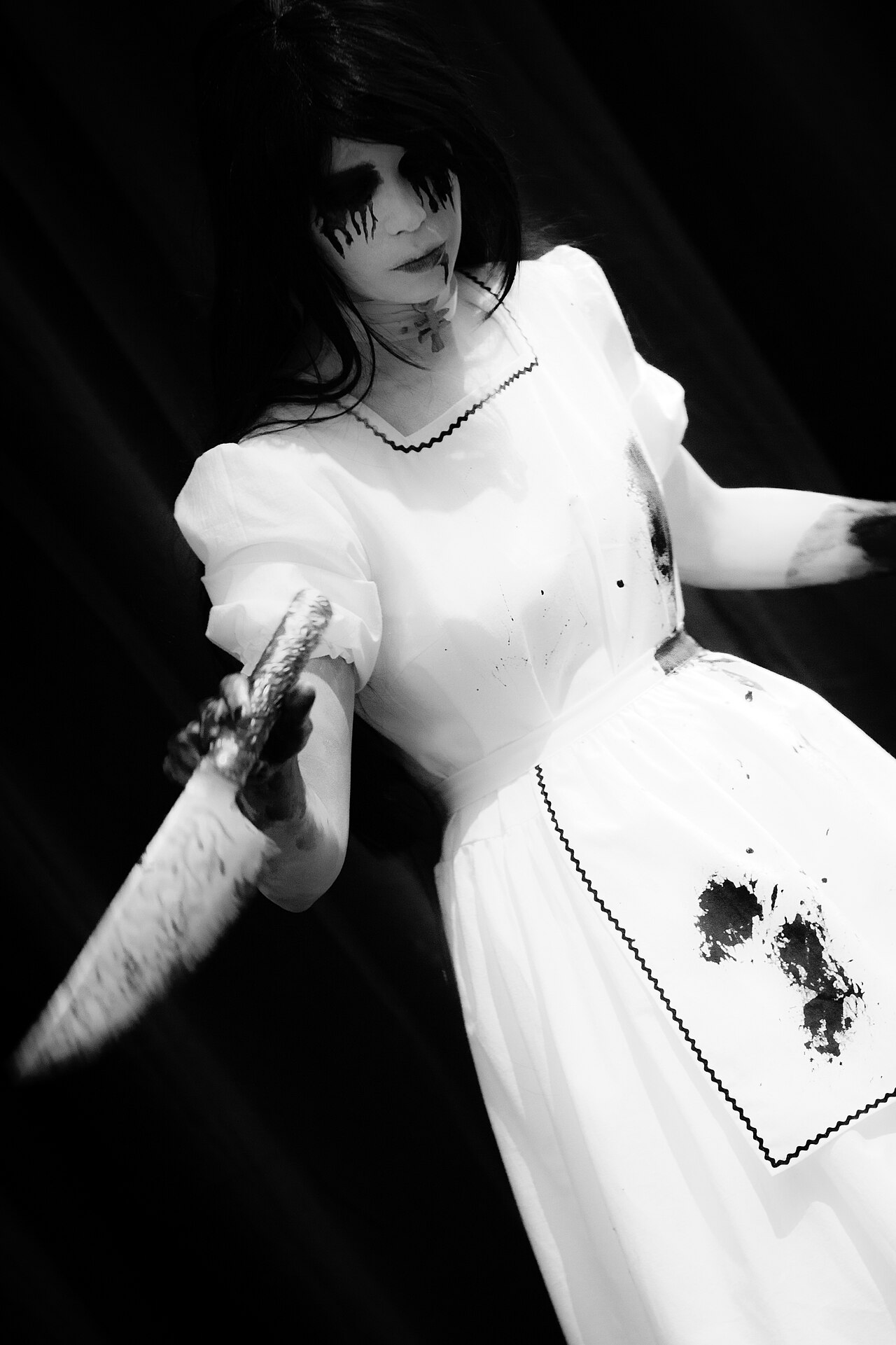
The game is a hack 'n' slash puzzle platformer viewed from a third-person perspective. Players control Alice throughout, performing actions like running, jumping, dodging, attacking, and shrinking. In combat, Alice has a small set of weapons used in various ways. Her main weapon is the Vorpal Blade, a decorated kitchen knife. The rest of her arsenal resembles benign, everyday items that become deadly in Wonderland, similar to the first game. The Pepper Grinder functions as a crank-operated Gatling gun for ranged attacks and hitting pig snouts. The Hobby Horse acts as a sledgehammer for heavy damage and breaking barriers. The Teapot Cannon fires exploding tea sieves for heavy damage and barrier breaking. Teeth collected from foes or found in levels allow players to upgrade these weapons. Two defensive weapons cannot be upgraded: the Umbrella, a shield that deflects projectiles, and the Clockwork Bomb, a time-delayed rabbit alarm clock that deals minimal damage but works as a decoy or weight for switches.
Alice's health is shown as rose petals. If health reaches zero, the player restarts at the last checkpoint. Health can be regenerated by entering giant purple flowers. Falling into pits or dangerous liquids restarts Alice at a nearby platform without damage. The Hysteria mechanic activates when health is very low, usable for a limited time. Players can discover secrets in each level. A key mechanic is Alice's shrinking potion, which reduces her size to pass through small spaces like keyholes and reveals invisible platforms; these
- Developer
- Spicy Horse
- Publisher
- Electronic Arts
- Release Year
- 2011
- Platforms
- Windows, PlayStation 3, Xbox 360
- Genre
- Action-adventure, hack 'n' slash puzzle platformer
- Director
- American McGee
- Protagonist
- Alice Liddell
Lore & Background
Alice: Madness Returns takes place in 1875, a year after Alice's release from Rutledge Asylum. Now 19, she lives in an orphanage for mentally traumatized orphans under the care of Dr. Angus Bumby, a psychiatrist who uses hypnosis to help children forget their memories. Alice still experiences hallucinations of Wonderland. The game's plot reveals that Dr. Bumby is responsible for the fire that killed Alice's family, having set it after Alice's sister Lizzie (Elizabeth) witnessed him abusing children. Alice confronts and kills Bumby by stabbing him with the Vorpal Blade, causing him to fall backward onto the train tracks, where he is hit by an oncoming train. Notably, the Infernal Train is a manifestation of Bumby's corruption, controlled by his Wonderland counterpart, the Train Conductor. The Dollmaker is a separate character associated with the Dollhouse area.
Reader's Guide
Alice: Madness Returns received mixed-to-positive reviews from critics. Its significance lies in continuing the dark, psychological reinterpretation of Lewis Carroll's works begun in American McGee's Alice. The game's gameplay combines hack 'n' slash combat with puzzle platforming, using weapons like the Vorpal Blade, Pepper Grinder, and Hobby Horse. A notable mechanic is Alice's shrinking potion, which reveals hidden platforms. The game's legacy includes American McGee's repeated attempts to produce a sequel; in 2023, EA, which owns the franchise rights, rejected his pitch. The game remains a cult title for its unique aesthetic and narrative exploration of trauma.
Did You Know?
- The game's working title was The Return of American McGee's Alice.
- A fan-made trailer titled 'The Return of Alice' was mistaken by gaming news outlets as an official teaser.
- Alice's health is tracked by rose petals, and she can regenerate health by entering giant purple flowers.
- The Infernal Train is an entity that corrupts Wonderland, created by the Dollmaker, Dr. Bumby's Wonderland counterpart.
A Story of Trauma and Erasure
The narrative of Alice: Madness Returns operates as a psychological horror wrapped in a fairy-tale setting. Set in 1875 Victorian London, the game follows nineteen-year-old Alice Liddell, who resides in an orphanage for mentally scarred children under the supervision of psychiatrist Dr. Angus Bumby. Alice was released from Rutledge Asylum the previous year after a fire consumed her home and killed her family—she had believed herself responsible. Bumby employs hypnosis to help his young patients suppress their traumatic memories, and Alice, though she considers herself recovered, continues to experience vivid hallucinations of Wonderland.
The plot escalates when Alice is struck by one such hallucination and re-enters the twisted land. There, an entity known as the Infernal Train ravages the once-peaceful realm. Through conversations with Wonderland's inhabitants and a family solicitor named Wilton J. Radcliffe, Alice uncovers that her sister Elizabeth was the first to perish in the blaze despite being farthest from its origin, and that she had been locked in her room. The revelation that Dr. Bumby orchestrated the deaths and intended to leave Alice as a memoryless "blank toy" to be sold to exploitative masters drives the game's climactic confrontation.
Combat Arsenal and Exploration Systems
Played from a third-person vantage point, the game blends hack-and-slash combat with puzzle-based platforming. Alice wields a small but varied arsenal rooted in mundane objects. Her signature weapon, the Vorpal Blade, is a decorated kitchen knife. The Pepper Grinder functions as a crank-operated Gatling gun for ranged attacks, while the Hobby Horse serves as a heavy sledgehammer capable of breaking barriers. The Teapot Cannon launches tea sieves that detonate on impact. Two items lean more defensive: the Umbrella deflects and reflects incoming projectiles, and the Clockwork Bomb—a rabbit-shaped alarm clock with a time delay—works best as a decoy or a weight to hold switches in place. Players collect teeth dropped by enemies to upgrade most weapons.
Health is represented by rose petals, and a desperation mechanic called Hysteria activates when Alice's petals are nearly depleted. Exploration rewards curiosity: the shrinking potion reveals invisible platforms that fade back once Alice returns to normal size, pig snouts can be struck to open new routes, and Radula rooms offer short challenges granting paint jars. Four jars restore an extra rose. Scattered memories provide voiceover fragments of Alice's backstory, and a New Game Plus mode lets players replay with all upgrades intact.
Wonderland Under Siege
The corrupted Wonderland of Madness Returns is a land under active assault. The Infernal Train, an entity of destruction, rampages through what was once a peaceful realm, leaving behind the Ruin—a force that actively attempts to stop Alice in her quest. The Cheshire Cat plays a crucial narrative role, confirming to Alice that the corruption stems from an outside force rather than her own fractured psyche, and urging her to seek out former friends and foes for answers.
Throughout her journey, Alice encounters a familiar cast: the Duchess, the Mad Hatter, the March Hare, the Dormouse, the Mock Turtle, the Walrus and the Carpenter, the Caterpillar, and the White King. Each provides fragments of information. They ultimately reveal that the Queen of Hearts survived Alice's earlier defeat, though in a diminished state. At the Queen's castle, Alice discovers the monarch's true form, which strikingly resembles her younger self. The Queen then discloses the existence of the Dollmaker, the entity responsible for creating the Infernal Train and orchestrating the corruption of Wonderland. The game alternates between these Wonderland episodes and brief returns to Victorian London, grounding the fantastical in Alice's very real psychological struggle.
Development, Reception, and an Unfinished Legacy
Alice: Madness Returns was developed by Spicy Horse and published by Electronic Arts in 2011, released for Windows, PlayStation 3, and Xbox 360. As the sequel to the 2000 original American McGee's Alice, it was directed by the series creator himself, American McGee, who maintained creative vision over the project. The game received mixed-to-positive reviews from critics, a reception that reflected both its ambitious narrative scope and the challenges of translating its dark fairy-tale aesthetic into a cohesive action-adventure experience.
Despite the sequel's release, the franchise has remained dormant for over a decade. American McGee made multiple attempts to initiate production of a third entry, but each effort stalled. In 2023, EA—now the rights holder for the franchise—formally rejected his pitch for another sequel. This decision effectively closed the door on further official entries in the series, leaving the story of Alice Liddell and her corrupted Wonderland without a definitive conclusion. For fans who followed the character's journey from the original 2000 game through Madness Returns, the 2023 rejection represents a significant loss, as the narrative threads of trauma, identity, and recovery remain unresolved.
Gallery





Frequently Asked Questions
Who developed and published Alice: Madness Returns?
Spicy Horse created the game under the direction of original series creator American McGee, and Electronic Acts handled publishing. It launched in 2011 for Windows, PlayStation 3, and Xbox 360 as the direct sequel to the 2000 original.
What weapons and combat tools does Alice have in Alice: Madness Returns?
Alice fights with a hocket (a retractable whip), a flaming sword, and a bow, each suited to different enemy types and platforming challenges. She can also swing across gaps using the hocket, blending melee and ranged combat within the hack-and-slash framework.
How does the story of Alice: Madness Returns end?
After piecing together the truth behind her family's death and confronting the corrupted figures of Wonderland, Alice ultimately accepts her trauma rather than being consumed by it. The final scene shows her returning to the real world and beginning to heal, leaving the door open for further growth.
Why is Alice: Madness Returns considered significant in the hack and slash genre?
It proved that a dark, psychologically driven narrative could sit comfortably inside a fast-paced combat-and-puzzle loop without either element feeling tacked on. Its blend of visceral melee takedowns, platforming set-pieces, and a genuinely somber story about grief set a template for narrative-driven action games.
What is the core premise of Alice: Madness Returns?
A young Alice Liddell, freshly discharged from a psychiatric ward and living in a care facility for traumatized children, is pulled back into a twisted version of Wonderland. Her journey through its corrupted realms is driven by the need to uncover what really happened to her family and reclaim her own identity.
More in Hack and slash games 1-24
Spotted an error? Know more?
This is a living reference — every entry is fact-audited, and reader corrections feed straight into our audit queue. Suggest an edit · See this site's audit record