
American McGee's Alice
A dark fantasy action-adventure set in a traumatized Wonderland.

Wikipedia / Wikimedia Commons
American McGee's Alice, a dark fantasy action-adventure game from 2000, casts players in a third-person perspective. Rogue Entertainment developed it, with American McGee serving as director, and Electronic Arts published it under the EA Games banner. The initial release targeted Windows and Mac OS, and while a PlayStation 2 version was scrapped, it later became available digitally for PlayStation 3 and Xbox 360 as downloadable content tied to its sequel.
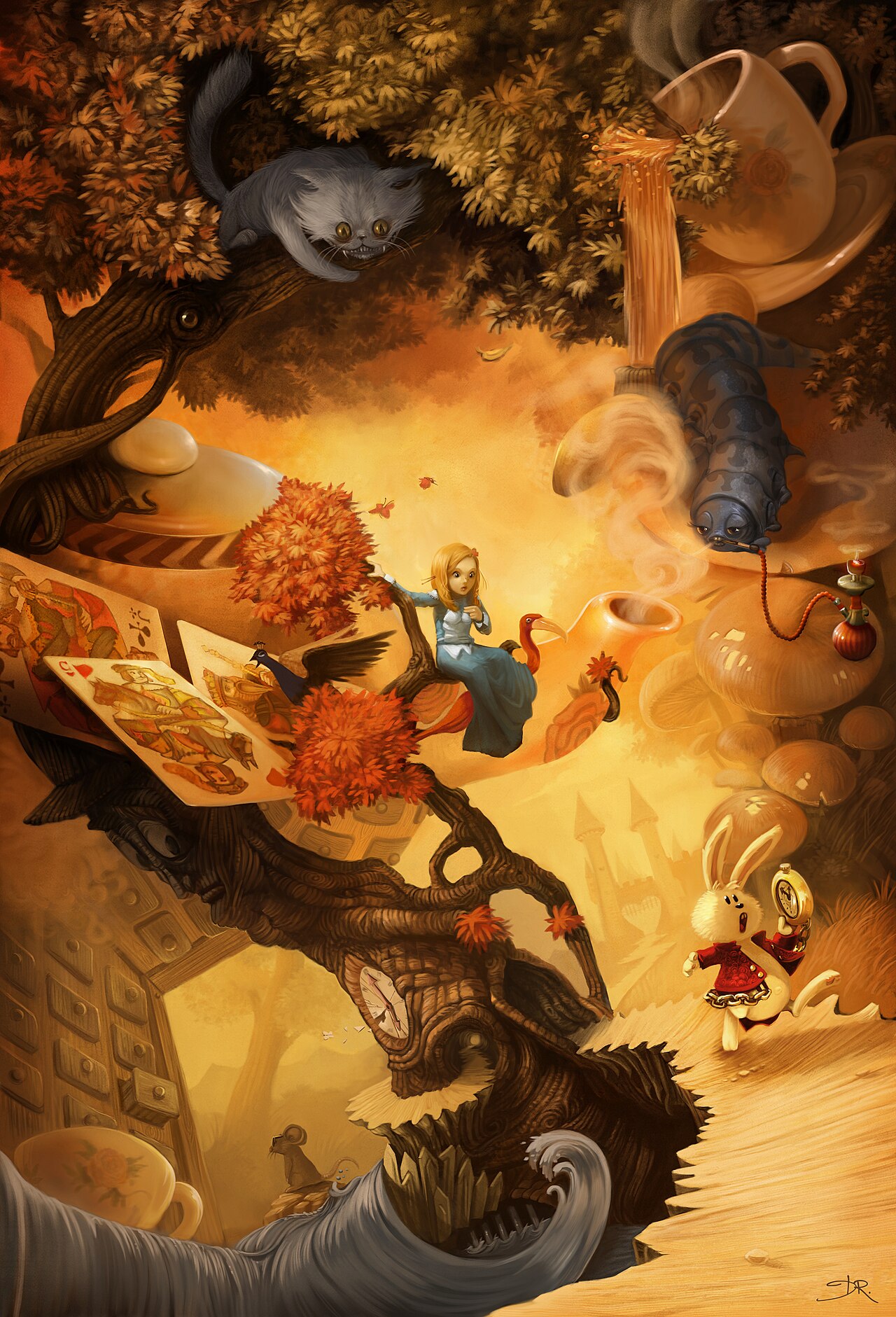
The game draws from Lewis Carroll's *Alice's Adventures in Wonderland* (1865) and *Through the Looking-Glass* (1871), but twists the setting into something bleak, cruel, and violent. The story follows Alice Liddell, whose family perished in a house fire years before the game begins. After enduring treatment in a psychiatric clinic, the traumatized Alice escapes into her own mind, retreating to a Wonderland that her damaged psyche has warped into a nightmarish landscape.
Powered by the id Tech 3 engine—previously used in *Quake III Arena* and adapted by Rogue Entertainment—the game earned positive reviews. Critics praised the high artistic and technical quality of its level design, though they noted the gameplay suffered from excessive linearity. By September 2017, *American McGee's Alice* had sold over 1.5 million copies. A sequel, *Alice: Madness Returns*, followed in 2011.
**Gameplay**
Players control Alice from a third-person view, guiding her along a linear path. She can converse with non-player characters, battle enemies and bosses, and solve puzzles. Beyond basic walking and jogging, Alice can jump, grab ledges, climb, swing on ropes, swim, and glide over steam columns by using her inflated dress like a parachute. Four difficulty levels are available: Easy, Medium, Hard, and Nightmare. Levels are filled with platforms, obstacles, and puzzles that must be solved to advance.
Alice can collect up to ten weapons, called "toys," each with two attack modes that vary in method and strength. The first toy she acquires is the Vorpal Blade, a melee weapon joined by the Croquet Mallet. Longer-range options include the Ice Wand and an explosive jack-in-the-box. One toy, the Jabberwock's Eye Staff, is crucial to the story and is found as a single item. The combat system automatically locks the weapon sight onto nearby enemies; outside combat, the sight becomes a pair of footpri
- Engine
- id Tech 3 (redesigned by Rogue Entertainment)
Lore & Background
The game's premise is based on Lewis Carroll's novels *Alice's Adventures in Wonderland* (1865) and *Through the Looking-Glass* (1871). In the story, Alice Liddell's family is killed in a house fire in 1863, but Alice survives the blaze without physical burns, though the trauma leaves her with severe psychological damage. After years of treatment at Rutledge Asylum, she mentally retreats to Wonderland, which has been disfigured by her injured psyche. The Queen of Hearts has put Wonderland in decline, and Alice must defeat the Queen and her sentinel, the Jabberwock, to restore the realm. The plot involves characters such as the Cheshire Cat, the White Rabbit, the Caterpillar, the Hatter, and the Gryphon, culminating in a battle with the Queen of Hearts, who warns that destroying her will destroy them both.
Reader's Guide
American McGee's Alice is significant for its artistic and technical quality, particularly its level design, which received positive critical reception, though reviewers criticized the excessive linearity of the gameplay. The game uses the id Tech 3 engine, previously used in Quake III Arena, and was redesigned for this game by Ritual Entertainment. It sold over 1.5 million copies as of September 2017. A sequel, Alice: Madness Returns, was released in 2011. The game's health and magic mechanics are represented as 'sanity' and 'willpower,' respectively, with crystals of 'meta-essence' and 'meta-substance' restoring these resources. The game features up to ten weapons called 'toys,' including the Vorpal Blade, Croquet Mallet, Ice Wand, and Jabberwock's Eye Staff. The combat system includes automatic target designation, and the game can be played at four difficulty levels: Easy, Medium, Hard, and Nightmare.
Did You Know?
- The game was originally released for Windows and Mac OS; a planned PlayStation 2 port was cancelled.
- The health mechanic is represented as 'sanity' and the magic mechanic as 'willpower.'
- The Jabberwock's Eye Staff is assembled from pieces scattered throughout the setting and is essential to the narrative.
- The game's engine, id Tech 3, was redesigned for this game by Ritual Entertainment.
A Dark Reimagining of Wonderland
The game reinterprets Lewis Carroll's 1865 and 1871 novels through a lens of grief and psychological damage. Alice Liddell's family perishes in a house fire in 1863, leaving her with burns and severe trauma. After years of failed treatment at Rutledge Asylum, she mentally retreats into a Wonderland warped by her broken psyche. The Cheshire Cat guides her, village inhabitants explain the Queen of Hearts has plunged the land into decline, and the Caterpillar reveals Wonderland's disfigurement stems from Alice's survivor guilt. The narrative demands she slay the Queen, but first she must defeat the Jabberwock and assemble the Eye Staff from scattered fragments. This transforms a children's classic into a story about processing loss, making the fantastical setting a direct externalization of internal pain rather than a whimsical escape.
Combat, Movement & Resource Management
Players navigate a linear third-person route where Alice can jump, cling to ledges, climb, swing on ropes, swim, and glide using her inflated dress as a makeshift parachute. Up to ten "toys" serve as weapons, most offering two distinct attack modes. The Vorpal Blade and Croquet Mallet handle close-range combat, while the Ice Wand and an explosive jack-in-the-box extend reach. The Jabberwock's Eye Staff is a narrative-critical weapon assembled from pieces hidden throughout the world. Combat features automatic target designation, and outside fights the sight becomes a jump indicator projecting footprints onto any surface Alice would land on. Health is framed as "sanity" on a red bar, while "willpower" on a blue bar fuels toy usage. Both are replenished by meta-essence and meta-substance crystals found across levels or dropped by slain foes. Temporary boosts like the Ragebox Elixir, Darkened Looking Glass, and Grasshopper Tea briefly alter Alice's stats and appearance.
Development & Technical Architecture
Developed by Rogue Entertainment under the direction of designer American McGee and published by Electronic Arts under the EA Games banner, the title launched in 2000 for Windows and Mac OS. The game runs on id Tech 3, the engine previously powering Quake III Arena, which was redesigned specifically for this project by Ritual Entertainment. A planned PlayStation 2 port was ultimately cancelled, though the game later reached PlayStation 3 and Xbox 360 players digitally as downloadable content bundled with its sequel. Four difficulty tiers—Easy, Medium, Hard, and Nightmare—let players calibrate the challenge to their skill. Despite the rigid structure that drew some criticism, the visual ambition and technical craftsmanship of the environments were widely praised. The combination of a proven engine, a visionary designer, and a major publisher created the foundation for what became a lasting cult classic.
Critical Reception & Lasting Legacy
American McGee's Alice earned positive critical reception upon its 2000 release, with reviewers singling out the visual ambition and technical polish of its environments. The most common criticism targeted the game's rigid, linear structure, which constrained player freedom within its prescribed route. By September 2017, the title had moved over 1.5 million copies, a testament to its enduring appeal well beyond initial launch. The game's legacy was cemented with the 2011 release of its sequel, Alice: Madness Returns, which also served as the vehicle through which the original became available on PlayStation 3 and Xbox 360 via downloadable content. The franchise established a template for dark fantasy action-adventure games rooted in psychological narrative, demonstrating that reimagining beloved literary properties through a mature, violent lens could resonate with both critics and a broad audience across more than a decade.
Gallery


Frequently Asked Questions
Who developed and published American McGee's Alice?
Rogue Entertainment built the game under the creative direction of American McGee, and Electronic Arts released it in 2000 under the EA Games label. The initial launch covered Windows and Mac OS.
What is the basic premise of American McGee's Alice?
The game reimagines Carroll's Wonderland as a shattered, trauma-soaked realm where Alice returns as a sword-wielding warrior to confront the Mad Hatter and restore order. It weaves elements from both Alice's Adventures in Wonderland and Through the Looking-Glass into a dark fantasy action narrative.
On which platforms is American McGee's Alice available?
The original 2000 release supported Windows and Mac OS, while a planned PlayStation 2 port was scrapped. The title later surfaced digitally on PlayStation 3 and Xbox 360 as downloadable content tied to its sequel, Alice: Madness Returns.
What engine does American McGee's Alice run on?
The game is built on id Tech 3, which Ritual Entertainment modified and redesigned specifically for this project. That foundation gave the title its distinctive visual look and smooth third-person combat feel.
How does the game's tone differ from Lewis Carroll's original books?
Where Carroll wrote whimsical nonsense and childlike curiosity, this game reframes Wonderland as a psychological nightmare and casts Alice as a vengeful, battle-scarred adult rather than a small girl. The familiar characters and locations are retained, but the mood shifts entirely toward gothic horror and dark fantasy.
More in Hack and slash games 1-24
Spotted an error? Know more?
This is a living reference — every entry is fact-audited, and reader corrections feed straight into our audit queue. Suggest an edit · See this site's audit record